The World's a Mess
Pay Attention!


The longer I do this work, the more I keep landing in the same place.
No matter where I look - parenting, education, athletics, mental health, quality of life…the answer keeps showing up the same way.
Mindfulness.
Pay attention.
That’s it.
And somehow, that simple act has become one of the hardest things for us to do.
Mindfulness isn’t complicated. It’s the practice of being fully present in the moment you’re actually in, instead of the one you’re worried about, replaying, or scrolling past.
When you’re present, you become less reactive and more discerning. You gain clarity around what you can control and what you can’t. Life doesn’t suddenly get easier, but it does get cleaner. You stop fighting imaginary fires.
That alone changes quality of life.
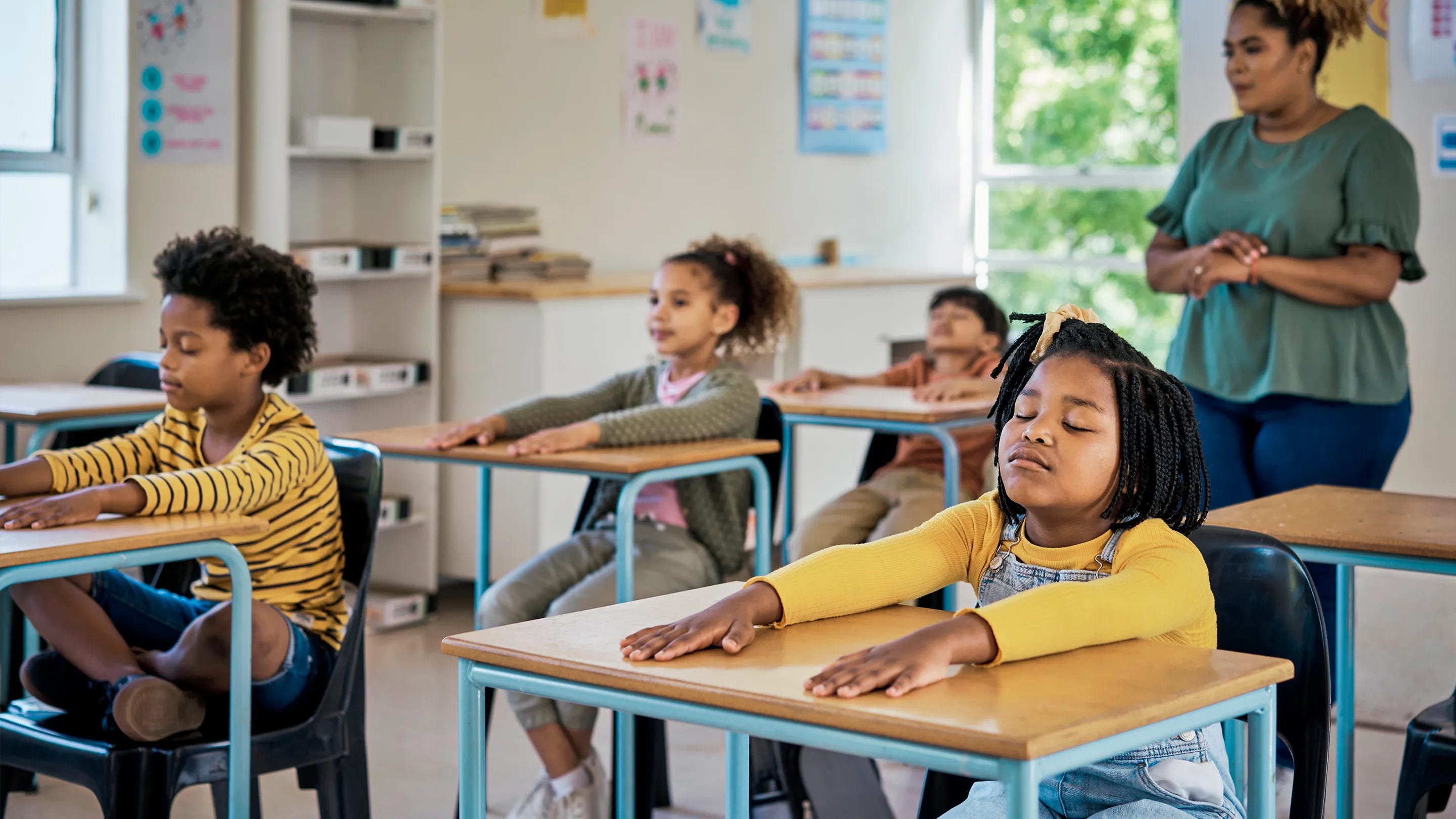
I’ve been working in a public school setting for the past few years, and what I’m seeing feels less like an exception and more like the norm.
Anxious kids. Emotionally overwhelmed kids. Distracted kids. Kids who struggle to regulate their thoughts, bodies, and emotions.
But of course that’s what we’re seeing.
Parents are reporting mental health challenges at historically high levels. Kids are growing up in a world of constant stimulation, constant comparison, and constant noise. Screens and social media are everywhere, and the depressive and anxiety-inducing effects are no longer subtle.
When attention is constantly fractured, nervous systems never settle.
So what’s the answer in classrooms?
Teaching kids how to slow down. How to breathe. How to notice what’s happening in their bodies instead of being overwhelmed by it. Not as a cure-all, but as a foundation.
Mindfulness.

Athletes already understand this, even if they don’t call it mindfulness.
No sport demands present-moment control like baseball. The reaction window is microscopic. You have milliseconds to decide, commit, and execute.
You cannot do that distracted.
You cannot do that anxious.
You cannot do that living in the last pitch or the next one.
Great hitters aren’t thinking more. They’re present more. They’re breathing. They’re locked into this pitch.
That’s what mindfulness looks like.
And this isn’t just about kids or sports.
It’s everywhere.
We see it in classrooms.
We see it in homes.
We see it on fields.
And we see it on the roads.
Distracted drivers staring at their phones, scrolling at red lights, glancing down for “just a second” at highway speeds. That isn’t a lack of skill. It’s a lack of presence. And the consequences are real.
The same pattern repeats itself across our lives.
The anxious fifth grader who can’t settle.
The parent scrolling while their child is talking to them.
The adult stuck in a loop of stress, reactivity, and exhaustion.
Different settings. Same root issue.
Not being where we are.
Mindfulness isn’t sitting on a cushion or escaping reality. It shows up through simple, practical habits: breathwork that regulates the nervous system, awareness of emotional states before they spiral, journaling that slows thought patterns down, active listening instead of waiting to speak, and daily choices that support clarity instead of chaos.
None of this is flashy.
All of it works.
Stacked together, these practices don’t guarantee happiness but they do give you the best possible chance at a meaningful life.
Jiddu Krishnamurti said it best:
“It is no measure of health to be well adjusted to a profoundly sick society.”
We live in a culture addicted to distraction. In that context, paying attention can feel uncomfortable, even threatening, because it asks us to stop numbing, stop scrolling, and stop running from ourselves.
It asks us to be here.
The answer to anxious kids, burned-out parents, distracted athletes, overwhelmed adults, and yes, distracted drivers, isn’t more information or more noise.
It’s presence.
Mindfulness.
Pay attention.
Everything depends on it.
“You stop fighting imaginary fires.“
I love this. So true.